
KRISS Hosts the International Optical Radiometry Conference "NEWRAD 2026"
- Writerkrissadmin5
- Date2026-09-15 00:00
- Hits185
KRISS Hosts the International Optical Radiometry Conference "NEWRAD 2026"
- Held in Korea again after 18 years, with a KRISS researcher becoming the first Korean appointed Chairman of the NEWRAD Science Committee -
- Optical radiometry broadened by climate, space, quantum, and AI, linking international comparison, research, and standardization -
"NEWRAD 2026," the 16th International Conference on New Developments and Applications in Optical Radiometry, jointly organized by the Korea Research Institute of Standards and Science (KRISS, President Dr. Lee Ho Seong) and the Korean National Committee of the CIE (KCIE, Chairman Dr. Lee Dong-Hoon), officially opened on the morning of September 14 at the Seogwipo KAL Hotel on Jeju Island and is scheduled to continue until the 17th.
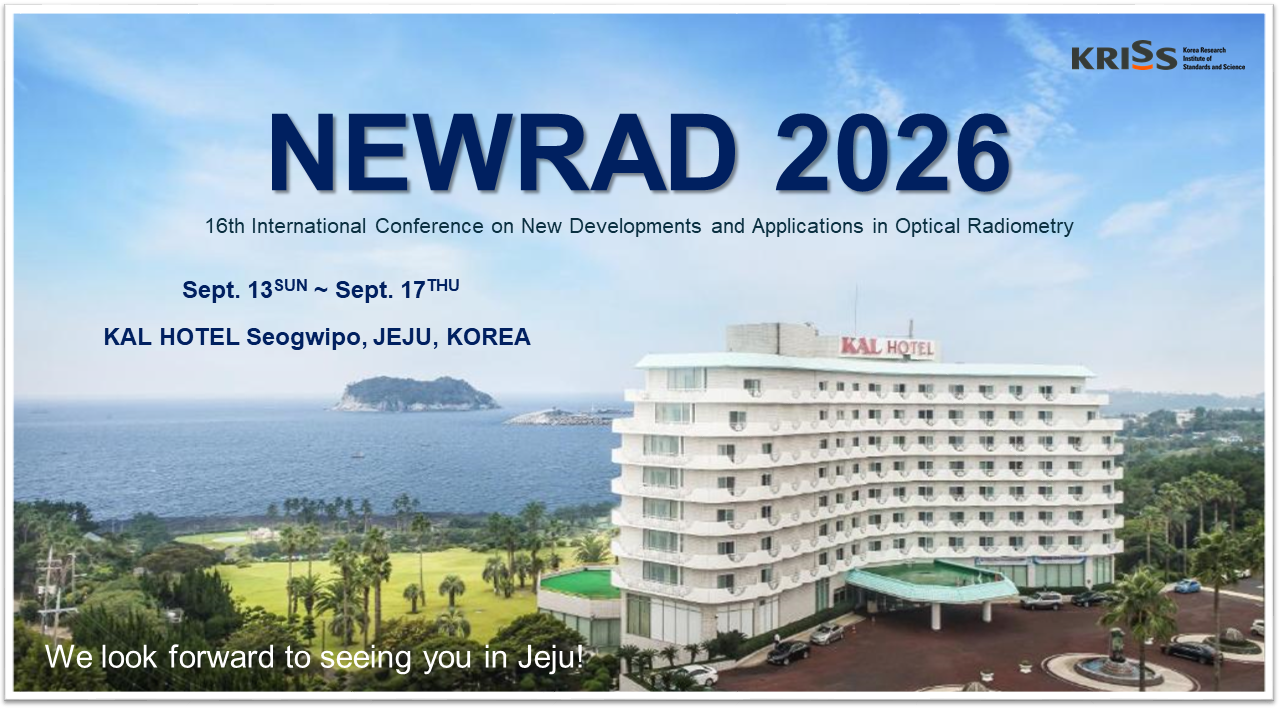
▲ The "NEWRAD 2026" information leaflet
NEWRAD is an international conference that shares the latest research achievements and application directions in optical radiometry, and has been held roughly every three years since it began in the United States in 1985. Korea, which became the first Asian host country in 2008, hosted its second conference this year, becoming the fourth country to host NEWRAD twice, after the United States, the United Kingdom, and Switzerland.
Optical radiometry is a technology that quantitatively measures the intensity and spectral characteristics of light, including ultraviolet, visible, and infrared light. While the focus in 2008 was on basic measurement standards and detector and light source technologies, now, 18 years later, the role of optical radiometry has expanded into a measurement infrastructure that underpins the reliability of the climate, space, quantum, and advanced-industry fields.
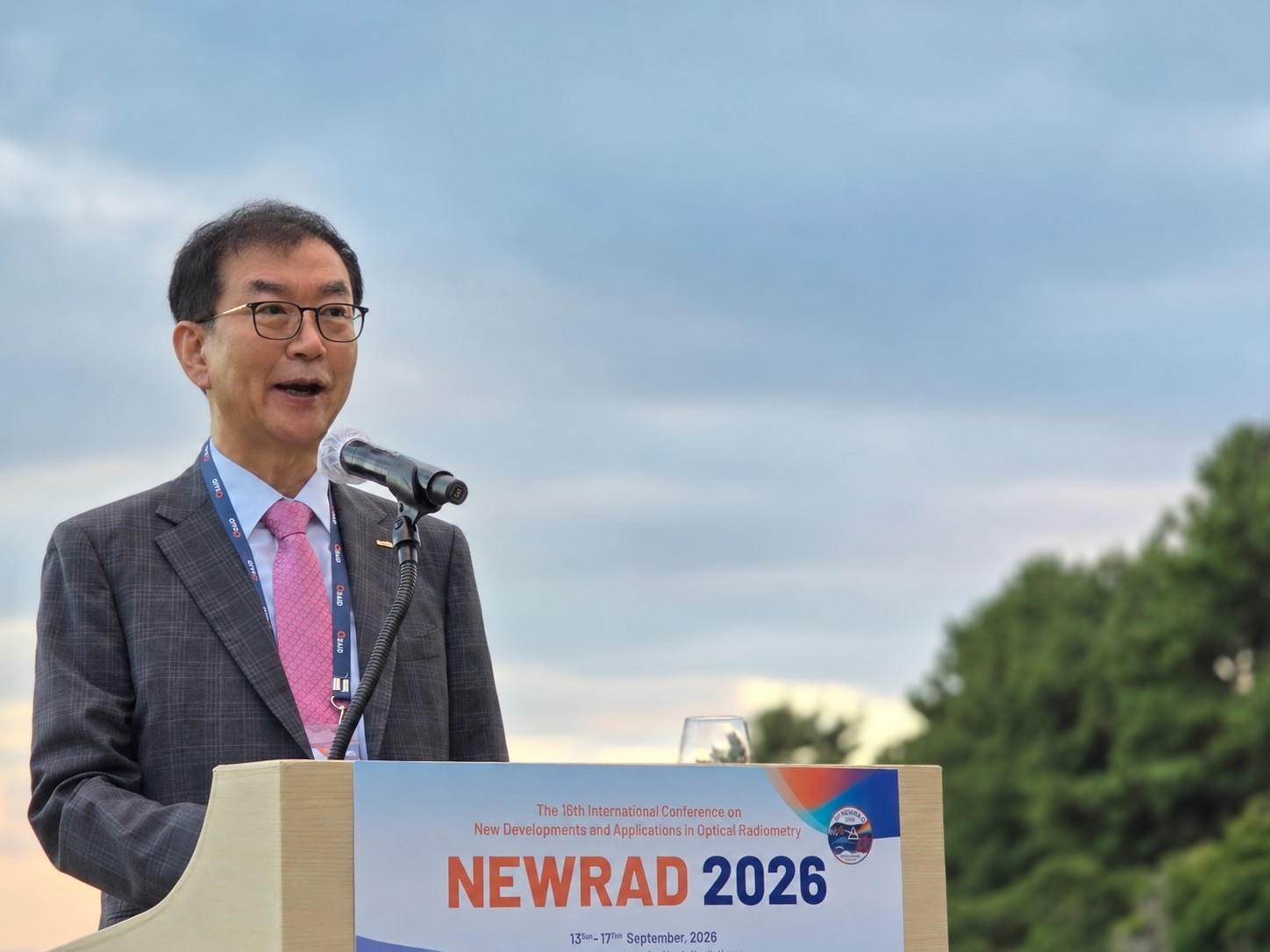
▲ KRISS President Dr. Lee Ho Seong delivering the welcoming address at the "NEWRAD 2026" opening session
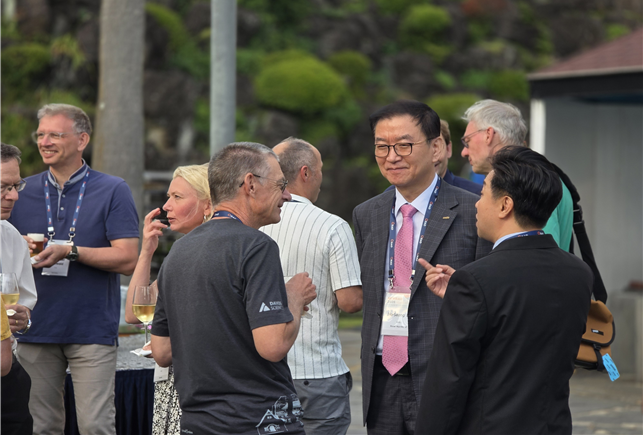
▲ Key participants networking after the "NEWRAD 2026" opening session
These changes are reflected in this year's program as well. NEWRAD 2026 consists of 10 oral sessions and 3 poster sessions, covering solar, stellar, and lunar radiometry, Earth observation, detector- and light source-based radiometry, quantum optics, optical materials and components, new applications, and AI and digital transformation.
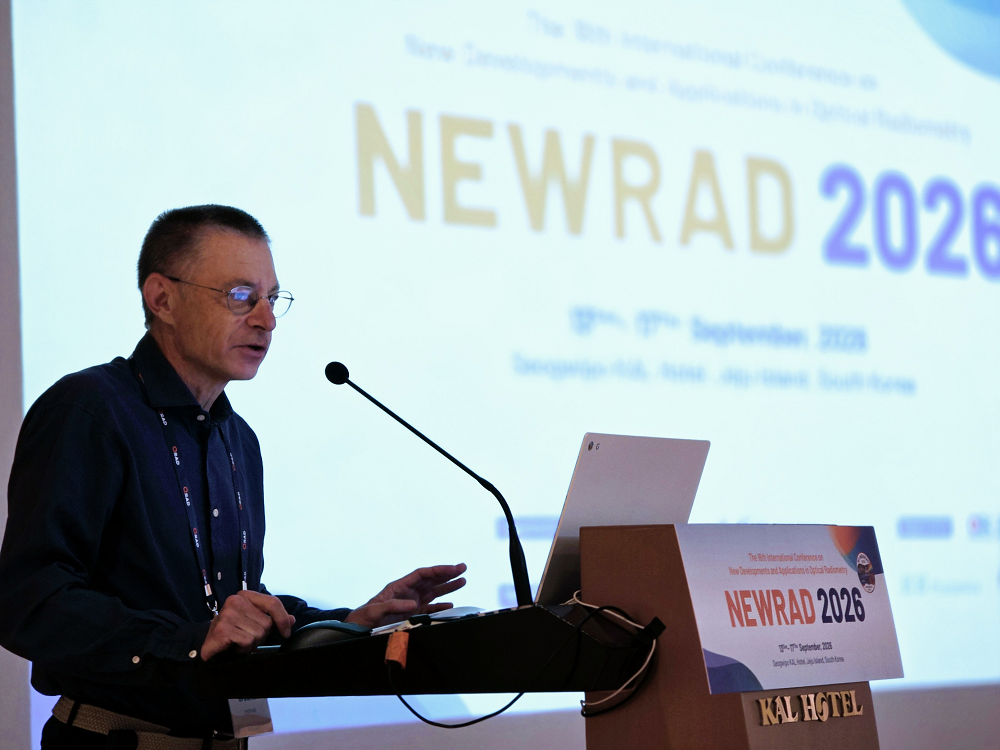
▲ Julian Gröbner, Chairman of NEWRAD 2026 (PMOD/WRC, Physikalisch-Meteorologisches Observatorium Davos, World Radiation Center, Switzerland), giving a presentation
A total of about 140 experts from national metrology institutes (NMIs), universities, and research institutions in 30 countries registered for the conference, and 132 papers, including invited presentations, were submitted. Key invited lectures include those by Paul Smith of the Laboratory for Atmospheric and Space Physics (LASP) in the United States, on Earth observation satellite calibration and measurement uncertainty; Daiji Fukuda of the National Metrology Institute of Japan (NMIJ), on quantum-based radiometry; and Thiago Menegotto of Brazil's National Institute of Metrology, Quality and Technology (INMETRO), on digital transformation in photometry and radiometry.
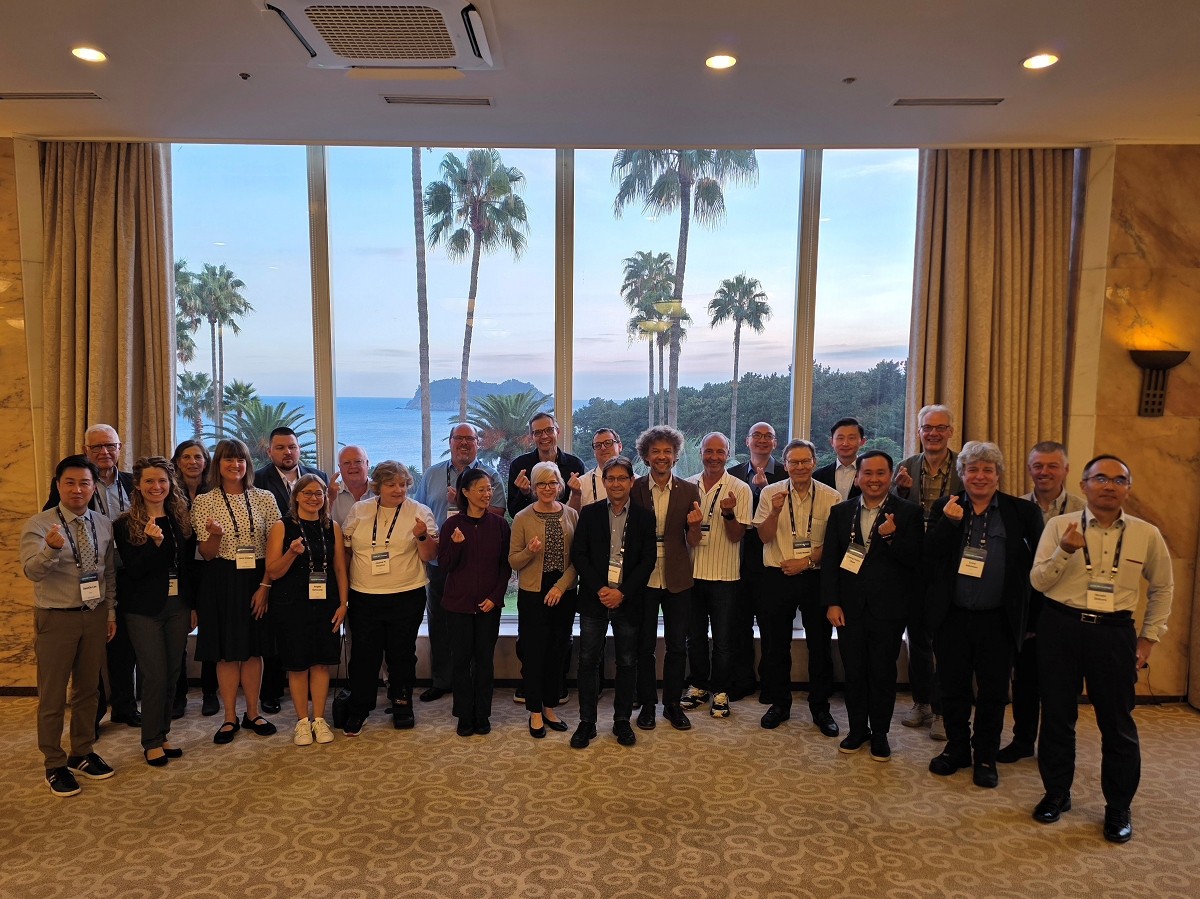
▲ Group photo of the Working Group of the CCPR, under the CIPM
Before and after NEWRAD, discussions to link new research achievements to international measurement standards also take place. Ahead of the conference, the Working Group of the Consultative Committee for Photometry and Radiometry (CCPR), under the International Committee for Weights and Measures (CIPM), discussed comparing each country's measurement results against the same standard and how to measure and verify newly emerging technologies. After NEWRAD, the International Commission on Illumination (CIE) will hold a measurement uncertainty tutorial and meetings of Division 2 and its technical committees to address optical measurement methods and standardization.
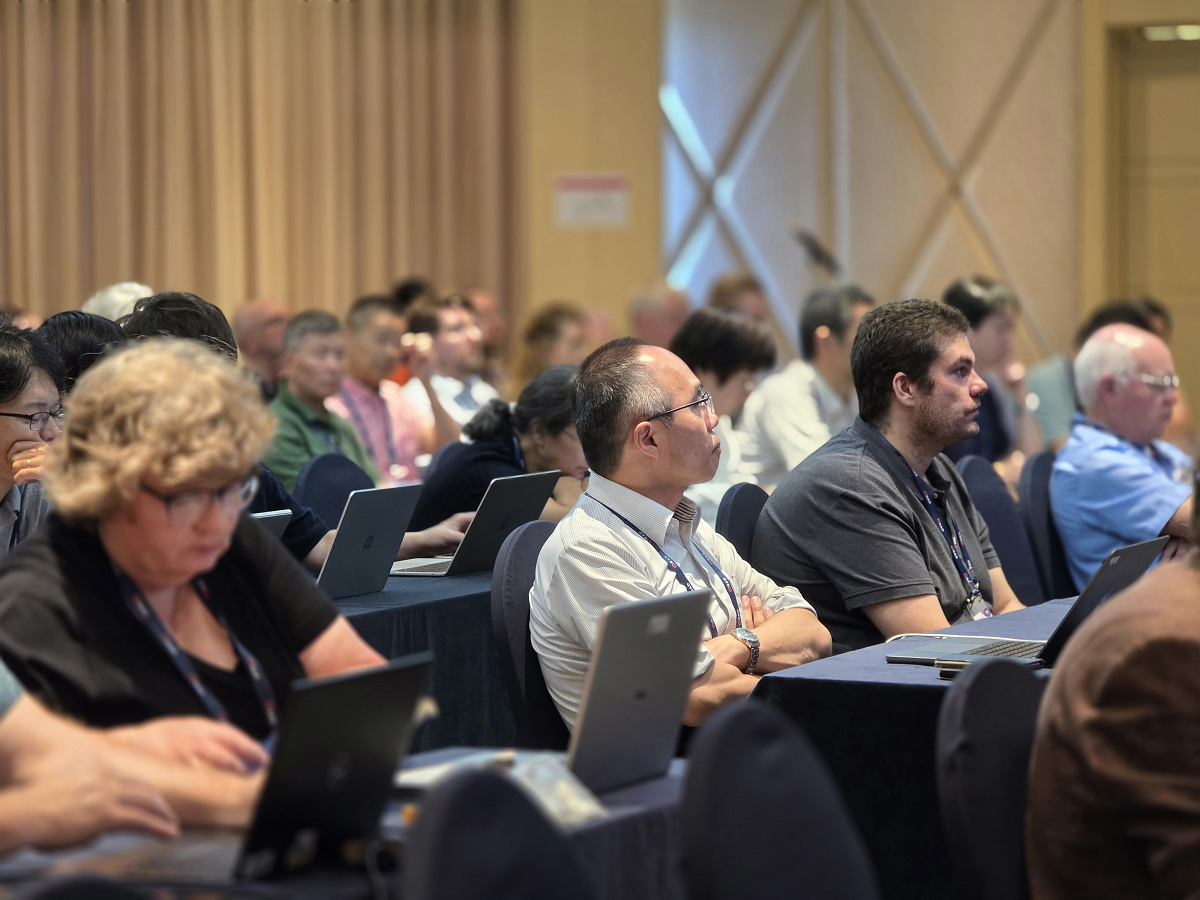
▲ A view of "NEWRAD 2026"
KRISS President Dr. Lee Ho Seong said, "As climate, space, and quantum technologies become more precise, the reliability of a technology depends on what is measured and how accurately. Building on this NEWRAD, we will further expand KRISS's international role in jointly shaping future optical radiometry standards."
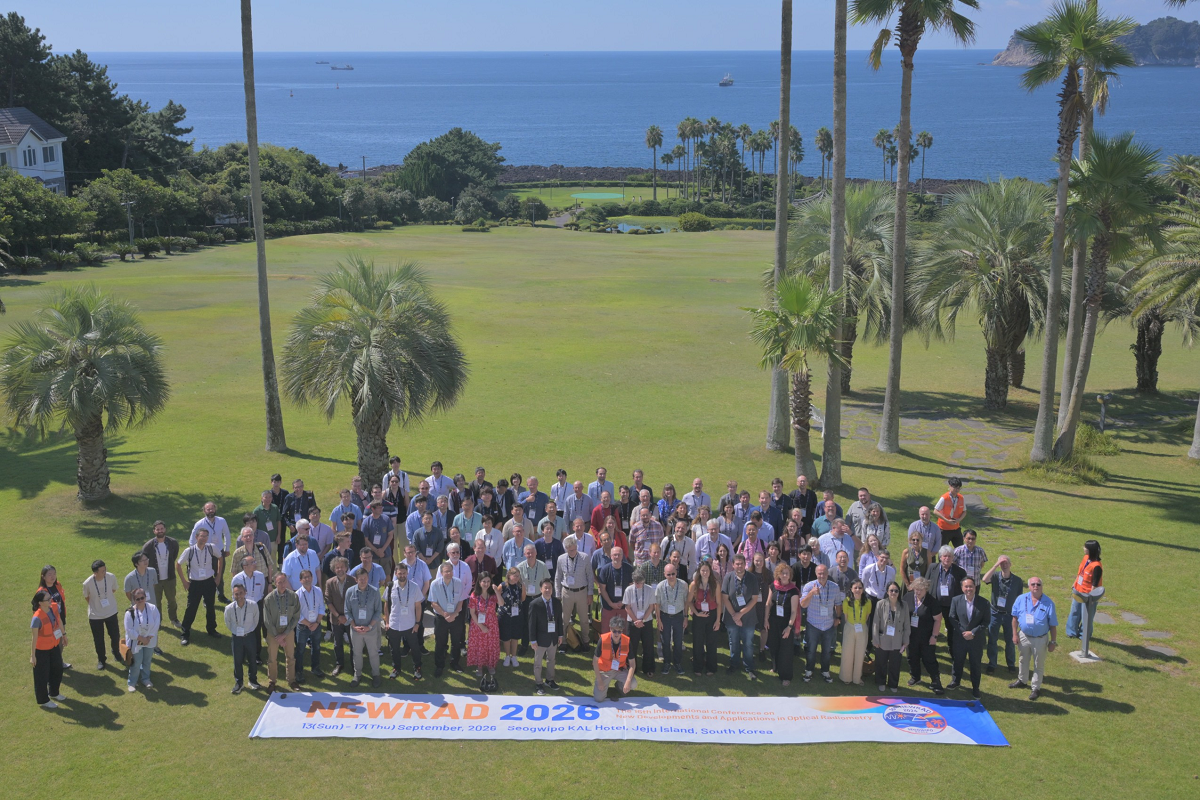
▲ Group photo of "NEWRAD 2026"
Meanwhile, Dr. Lim Seon Do, Head of the Photometry and Radiometry Metrology Group at KRISS, who oversaw this event, has been appointed as the first Korean to serve as the next Chairman of the NEWRAD Science Committee, taking on the role after this conference concludes. As Chairman, Dr. Lim will be responsible for the medium- to long-term operation of NEWRAD, including selecting the next host location, organizing the Science Committee, setting the direction of the academic program, and choosing invited speakers, thereby contributing to NEWRAD's academic agenda and the formation of an international research network.